
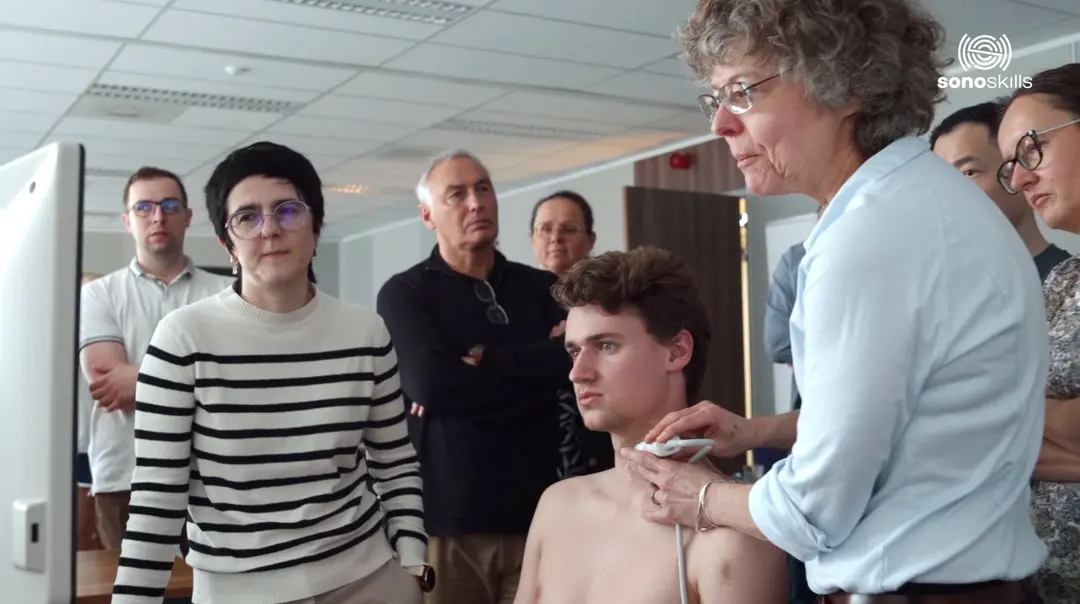
What is the Difference Between Neuromuscular Ultrasound and MSK Ultrasound?
Last updated
Musculoskeletal ultrasound has become a standard imaging tool for clinicians working with patients who present with pain, injury, or dysfunction of the musculoskeletal system. Sports physicians, radiologists, orthopaedic specialists and physiotherapists increasingly use ultrasound as an extension of their physical examination.
However, a term that is appearing more and more often in the literature and in clinical practice is neuromuscular ultrasound. Many clinicians ask the same question: is neuromuscular ultrasound simply another name for MSK ultrasound, or is it something different?
The short answer is that neuromuscular ultrasound is closely related to musculoskeletal ultrasound, but it focuses on a different set of structures and clinical problems.
Understanding the difference between the two helps clinicians use ultrasound more effectively and broaden their diagnostic capabilities.
MSK ultrasound: imaging the musculoskeletal systemMusculoskeletal ultrasound (often abbreviated as MSK ultrasound) focuses on imaging the structures that make up the musculoskeletal system. These include tendons, ligaments, muscles, bursae and joints.
Typical clinical indications include tendon injuries, tendinopathy, bursitis, ligament injuries, muscle tears and joint effusions. For example, ultrasound is commonly used to evaluate rotator cuff pathology, Achilles tendinopathy, plantar fasciitis, lateral epicondylitis or knee effusions.
One of the major strengths of MSK ultrasound is that it allows dynamic assessment. Structures can be examined while they move, while the patient performs specific manoeuvres, or while stress is applied to a joint or tendon. This dynamic capability often provides information that static imaging modalities cannot easily offer.
Another advantage is that ultrasound can immediately be used to guide procedures such as injections, aspirations or minimally invasive interventions.
For many clinicians, MSK ultrasound has become an indispensable tool in daily practice.
Neuromuscular ultrasound: imaging peripheral nervesNeuromuscular ultrasound focuses specifically on peripheral nerves and their interaction with surrounding tissues. Although nerves can be visualised with the same ultrasound equipment used for musculoskeletal imaging, scanning nerves requires a different approach and a different anatomical focus.
Peripheral nerves have a characteristic fascicular structure on ultrasound. Neuromuscular ultrasound allows clinicians to evaluate nerve size, shape, echogenicity and mobility. It also makes it possible to follow the course of a nerve along its anatomical pathway.
This technique is particularly useful in the evaluation of nerve entrapment syndromes, compressive neuropathies and nerve injuries.
Examples of conditions commonly evaluated with neuromuscular ultrasound include carpal tunnel syndrome, ulnar nerve entrapment at the elbow, radial nerve compression and Morton’s neuroma. Ultrasound can also help detect nerve tumours, nerve trauma and structural abnormalities.
In addition to static imaging, neuromuscular ultrasound can also be used dynamically to evaluate nerve movement during limb motion. In certain entrapment syndromes, the nerve may subluxate, become compressed during movement, or show altered mobility relative to surrounding tissues.
Why the distinction mattersAlthough neuromuscular ultrasound and musculoskeletal ultrasound use the same technology, they require somewhat different skills and knowledge.
MSK ultrasound focuses primarily on tendons, ligaments and muscles, while neuromuscular ultrasound requires a detailed understanding of peripheral nerve anatomy and nerve pathology.
For clinicians who already perform musculoskeletal ultrasound, learning neuromuscular ultrasound is a natural next step. The scanning techniques are similar, but the diagnostic possibilities expand significantly.
Incorporating nerve imaging into clinical practice allows clinicians to evaluate patients with unexplained pain, numbness, tingling or weakness in a much more targeted way.
In many cases, neuromuscular ultrasound can complement electrodiagnostic studies and provide anatomical information that nerve conduction tests cannot show.
Learning neuromuscular ultrasoundAs interest in peripheral nerve imaging continues to grow, structured training becomes essential. Recognising normal nerve anatomy and identifying subtle pathological changes requires both theoretical knowledge and hands-on scanning experience.
At SonoSkills we offer dedicated training courses specifically designed to help clinicians develop expertise in neuromuscular ultrasound.
The Neuromuscular Ultrasound course provides a comprehensive introduction to peripheral nerve imaging. Participants learn the fundamentals of nerve anatomy, scanning techniques and common nerve pathologies. The course focuses on practical skills and helps clinicians integrate nerve ultrasound into their daily clinical practice.
For clinicians who already have experience with nerve ultrasound and want to deepen their knowledge, the Advanced Neuromuscular Ultrasound course provides a next step. This course explores more complex nerve conditions, advanced scanning strategies and challenging diagnostic cases.
Courses
Neuromuscular Ultrasound
https://www.sonoskills.com/neuromuscular-ultrasound/
Advanced Neuromuscular Ultrasound
https://www.sonoskills.com/advanced-neuromuscular-ultrasound/
Expanding your ultrasound skillsetMusculoskeletal ultrasound is already an extremely powerful diagnostic tool. By adding neuromuscular ultrasound to your skillset, you expand the range of conditions you can evaluate and improve your ability to diagnose nerve-related problems.
For clinicians working in sports medicine, orthopaedics, neurology or physiotherapy, peripheral nerve imaging represents one of the most exciting developments in ultrasound over the past decade. With the right training and experience, neuromuscular ultrasound becomes a natural and highly valuable extension of musculoskeletal ultrasound in everyday clinical practice.
Want to deepen your ultrasound skills?
Explore our hands-on and online courses in musculoskeletal ultrasound.